Huawei Forecasts 10 Key Megatrends for the Intelligent World of 2035

Staff Reporter
24 September 2025, 16:53
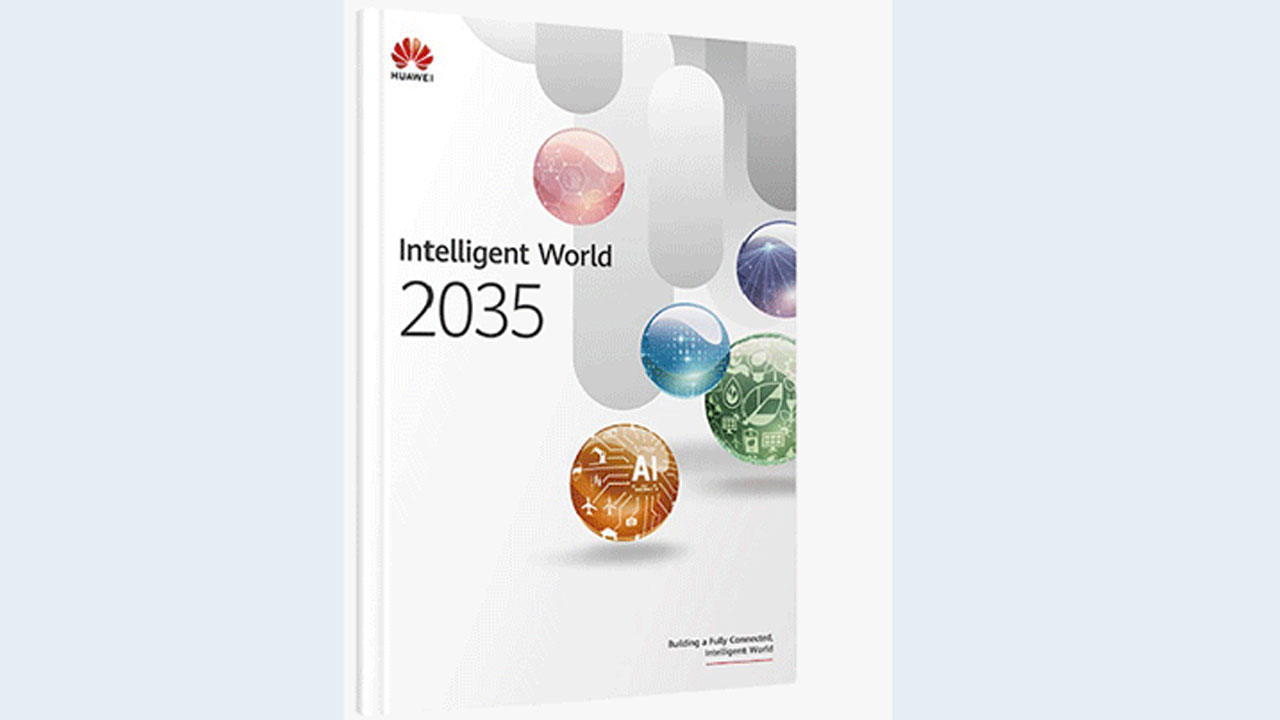
Huawei has unveiled two major white papers — the Intelligent World 2035 Report and the Global Digitalization and Intelligence Index (GDII) 2025 Report — outlining how emerging technologies will reshape industries such as education, healthcare, finance, manufacturing, and energy over the next decade.
In a statement shared by Huawei Bangladesh on Tuesday, David Wang, Executive Director of the Board at Huawei, emphasized the crucial role of technological exploration in human progress.
“Every leap forward in civilization has been paired with technological exploration. The drive to explore is a core part of human nature. It encourages us to push the boundaries of knowledge and technology. And today, it is leading us toward a more intelligent world,” Wang said. He added that generative AI is opening unprecedented opportunities, urging continued innovation to build “new scientific visions and assumptions.”
The Intelligent World 2035 report is the result of two years of research, including more than 200 workshops and consultations with over 100 experts, scholars, customers, and partners worldwide. Drawing on data from the United Nations, World Economic Forum, and other trusted sources, the report identifies 10 major technology megatrends that will define the coming decade:
- Artificial General Intelligence (AGI): AGI will be the primary driver of global transformation, with the integration of AI and physical systems bringing the world closer to a technological singularity.
- Rise of AI Agents: As large models scale up, AI agents will evolve from basic tools to decision-making partners, revolutionizing entire industries.
- Human-AI Programming: AI will take over repetitive coding, freeing developers to focus on high-level design and creative problem-solving.
- Natural Language & Multimodal Interfaces: Human-computer interaction will shift to natural language and multimodal interfaces, offering full sensory engagement through voice, gesture, and more.
- AI-Driven Mobile Apps: Apps will move from isolated functions to interconnected AI-powered service nodes capable of executing user commands across platforms.
- Advanced Autonomous Vehicles: Breakthroughs in world modeling will enable Level 4+ autonomous vehicles, transforming them into a “mobile third space.”
- Exponential Computing Growth: Computing capacity will grow 100,000-fold by 2035, driven by innovations in semiconductors, architecture, and new computing paradigms.
- AI-Driven Data Storage: AI-related storage demand will rise 500-fold, eventually making up more than 70% of global storage requirements.
- Agentic Internet: By 2035, nine billion people will interact with 900 billion intelligent agents, evolving the mobile internet into an agentic ecosystem.
- Energy Transformation: Global data centers will consume 1.5 trillion kWh of electricity by 2035. AI integration into energy systems will be critical to balancing demand, with wind and solar expected to supply 50% of global energy.
The report also envisions a world where AI plays a central role in everyday life: preventing over 80% of chronic diseases through proactive monitoring and equipping more than 90% of Chinese households with intelligent robots by 2035.
Alongside the megatrend report, Huawei introduced the upgraded Global Digitalization and Intelligence Index (GDII), an evolution of its previous Global Digitalization Index (GDI). The GDII incorporates new economic variables to offer a more comprehensive view of ICT maturity and how countries can harness digital transformation to maximize the benefits of AI.