OpenAI Starts Showing Ads to Free ChatGPT Users

News Desk
10 February 2026, 11:06
OpenAI has started testing advertisements inside ChatGPT for some users in the United States. The change marks a new step in how the company earns money from its popular AI chatbot. Ads will appear only for people on the Free and Go plans.
The Go plan launched globally in mid-January. It costs $8 per month in the United States. Users on Plus, Pro, Business, Enterprise and Education plans will not see ads, the company said.
OpenAI addressed concerns about trust and privacy in a blog post. The company said ads will not influence ChatGPT’s answers. It also said user conversations will remain private and will not be shared with advertisers. OpenAI added that ad revenue will help expand access to more advanced AI features.
The decision comes as competition in generative AI grows. During the Super Bowl on Sunday, rival company Anthropic aired commercials that mocked the idea of ads inside AI tools. The ads showed fictional chatbots giving advice while awkwardly inserting poorly matched promotions.
Sam Altman, OpenAI’s chief executive, reacted strongly. He called the commercials “dishonest.” He also described Anthropic as an “authoritarian company.” His remarks highlighted rising tensions in the AI industry.
Some users have already shown resistance to ads in AI products. Last year, OpenAI faced criticism after testing app suggestions that many people felt looked like ads. Still, the company faces high costs to develop and run advanced AI systems. Finding new sources of revenue has become more urgent.
Critics worry that advertising could shape how AI systems respond to questions. OpenAI rejected that idea. The company said ads will be chosen based on what is most helpful to users. It also said ads will be clearly labeled and kept separate from ChatGPT’s answers.
In early tests, OpenAI matched ads to users based on conversation topics and past activity. A person searching for recipes might see ads for grocery delivery or meal kits. OpenAI said advertisers will not see personal conversations or individual user data. They will only receive general performance data such as views and clicks.
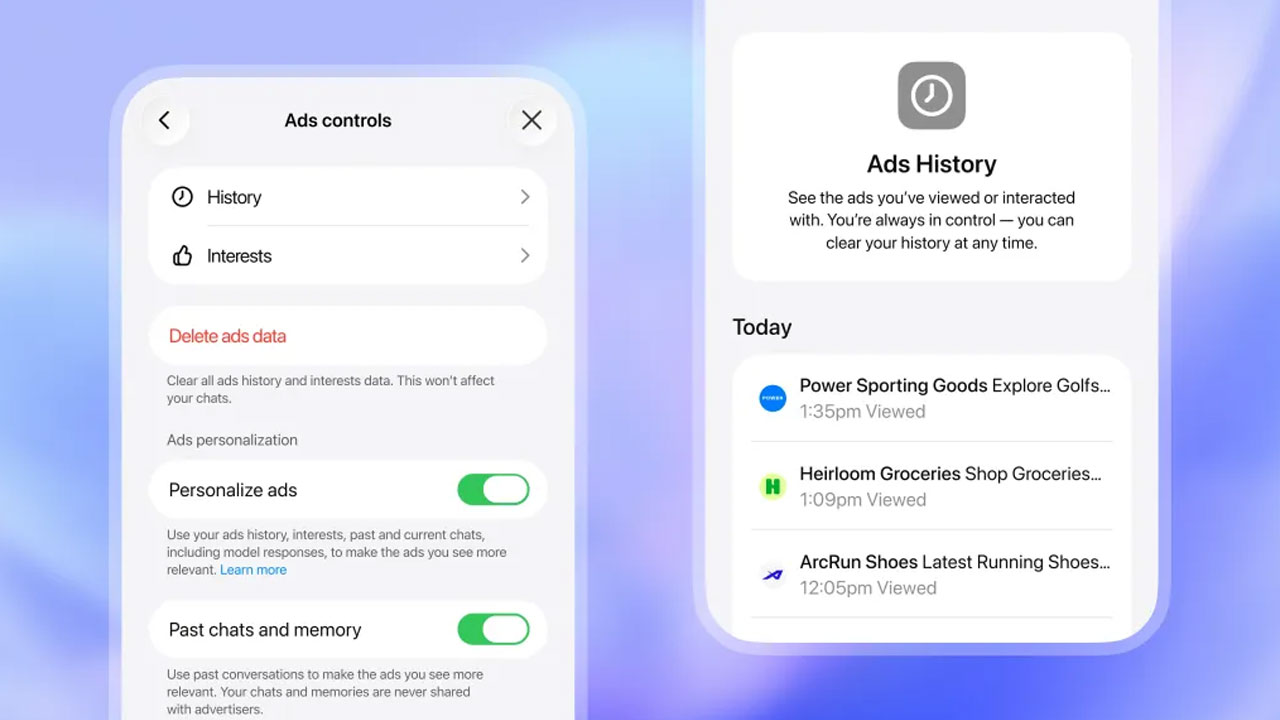
Users will have control over their ad experience. They can see their ad interaction history and delete it at any time. They can dismiss ads, give feedback and see why an ad was shown. They can also manage ad personalization settings.
OpenAI said ads will not be shown to users under 18. Ads will also not appear next to sensitive topics. These include health, politics and mental health.
The rollout shows how AI companies are trying to balance growth and trust. Building advanced AI systems is expensive. Advertising may become an important part of OpenAI’s business model. The company now faces the challenge of adding ads without harming the user experience that made ChatGPT popular.