Budget Expectations 2026-27
A Broad Reform Agenda and Emerging Opportunities for the ICT Sector

News Desk
09 June 2026, 11:41
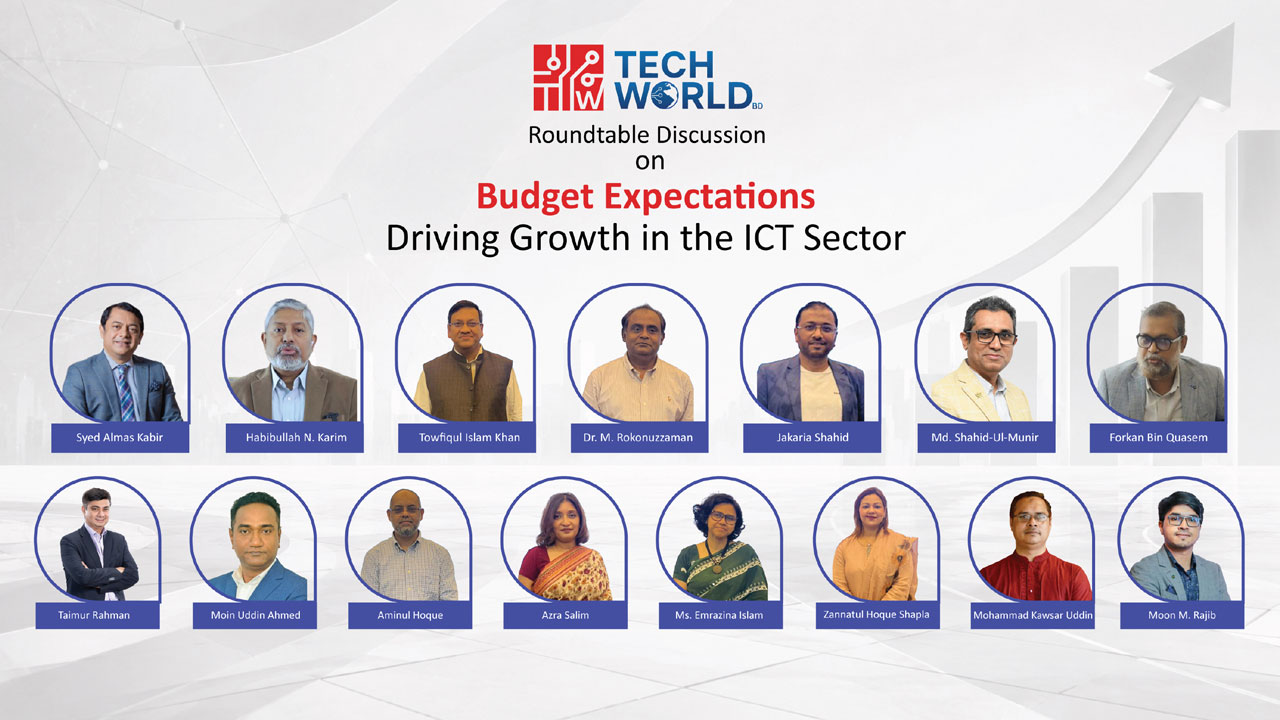
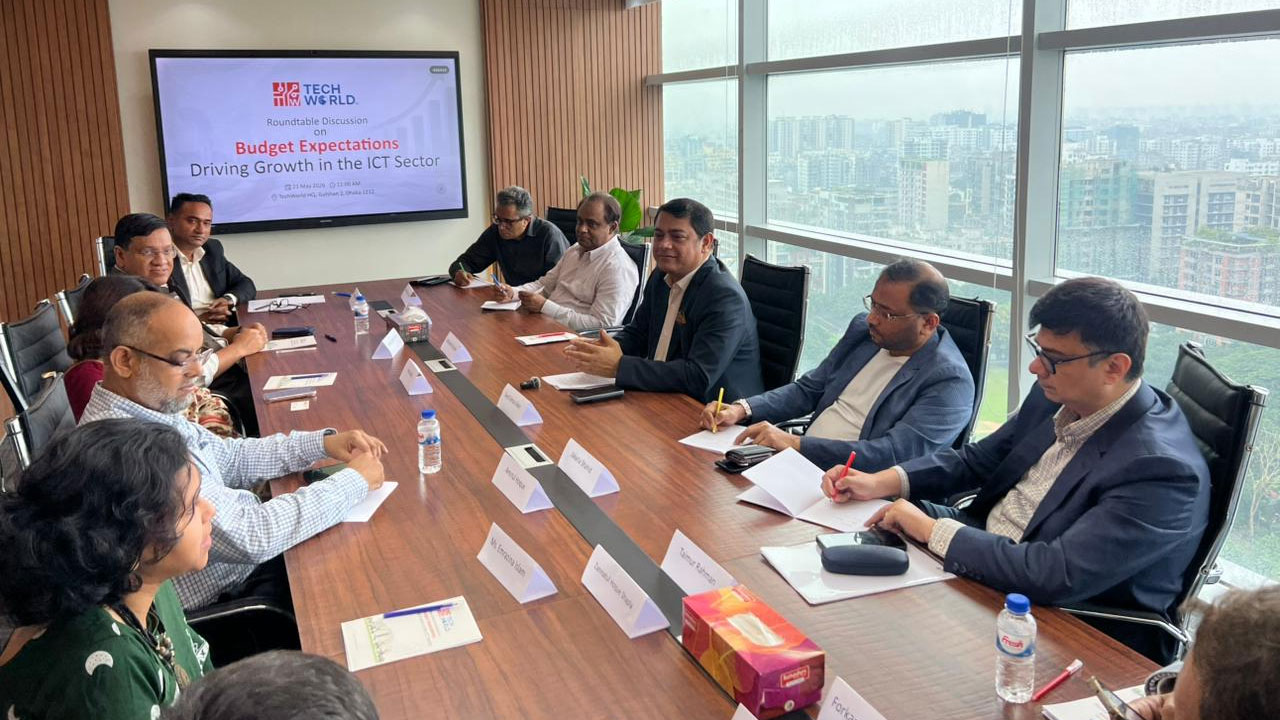
A comprehensive roundtable discussion involving stakeholders from across Bangladesh’s ICT sector was held ahead of the national budget for FY2026–27. Organised by TechWorld Bangladesh at its Gulshan office, the discussion brought together representatives from e-commerce, IT, telecom, BPO, internet services, freelancing, and policymaking, offering a snapshot of the challenges and expectations across the country’s digital ecosystem.
Speakers criticised existing tax policies, VAT structures and investment frameworks, while emphasising the need for skills development, research, and coordinated policymaking to ensure sustainable sectoral growth.
Long-term Expectations and Tax Policy Concerns
Stakeholders observed that although similar expectations are raised around the budget every year, implementation remains limited.
Tax Holiday and VAT
Syed Almas Kabir, former president of the Bangladesh Association of Software and Information Services (BASIS), said tax holidays for the IT and IT-enabled services (ITES) sectors have repeatedly been extended for short durations, creating uncertainty for investors. He also noted that the 15 percent VAT on online transactions remains a major obstacle for the e-commerce industry. Describing internet connectivity as a fundamental input for all sectors, he urged the government to reduce taxes on internet services.
Tax Structure Reform
Tawfiqul Islam Khan, additional director (Research) at the Centre for Policy Dialogue (CPD), said a tax-to-GDP ratio below 7 percent is unsustainable for the economy. Instead of raising tax rates, he proposed expanding the tax net and separating the National Board of Revenue’s policymaking functions from its revenue collection activities.
Employment and Skills Development in the BPO Sector
The BPO industry was identified as one of the key employment-generating sectors for fresh graduates.
Aminul Hoque, finance secretary of the Bangladesh Association of Call Center and Outsourcing (BACCO), said young professionals are gaining transferable skills through the BPO industry, which later helps them secure higher-paying jobs.
Calling for the extension of tax incentives for the ITES sector by at least another decade, he also proposed introducing a “train-the-trainer” model through collaboration between academia and industry.
TechWorld’s Vision for Technology and Policy Journalism
Speaking on the importance of highlighting sectoral challenges and policy discussions, Moon M. Rajib, managing editor of TechWorld Bangladesh, said the platform aims to establish itself as a credible technology magazine and online portal.
He added that one of its core objectives is to ensure comprehensive coverage of technology and policy developments through a 360-degree reporting approach.
E-commerce, Internet and Logistics Sector Challenges
Speakers said there is no alternative to a strong infrastructure and a rational taxation system for the growth of digital services.
E-commerce and Healthcare
Azra Selim, managing director and CEO of Shombhob Health Ltd, said the e-commerce sector is under pressure due to high capital costs, excessive taxation, and complications in cross-border payment processing.
Jannatul Hoque Shapla, associate committee member of the e-Commerce Association of Bangladesh (e-CAB), highlighted challenges related to collateral-free financing and logistics, and proposed the creation of a research and development fund.
Internet Services
Moin Uddin Ahmed, treasurer of the Internet Service Providers Association Bangladesh (ISPAB), said that although internet services have been declared a utility, this recognition has not been reflected in policy implementation. He called for reduced taxes on fibre imports and VAT rationalisation across multiple stages of service delivery.
Telecom and Hardware
Taimur Rahman, chief corporate and regulatory affairs officer of Banglalink Digital Communications Ltd, pointed to the nearly 34 percent tax burden on mobile recharge, describing it as excessive.
Meanwhile, Md Shahid-Ul-Munir, former president of Bangladesh Computer Samity (BCS), warned that high taxes on laptops and desktop computers could encourage the expansion of the grey market.

Policy Challenges and Long-term Planning
Speakers identified policy inconsistency and the lack of long-term planning as major barriers to sectoral growth.
Risks of a Debt-dependent Economy
Prof Dr M Rokonuzzaman, from the Department of Electrical and Computer Engineering at North South University, warned that international lending frameworks are exerting increasing influence over the economy. He urged the development of a homegrown development model based on local realities and cautioned against over-investment in component manufacturing without strategic grounding.
Lack of Long-term Planning
Forkan Bin Quasem, managing director and CEO of Spectrum Engineering Consortium (Pvt.) Ltd, said the national budget is often treated as an annual event rather than a long-term development tool. He stressed the need to strengthen collaboration between universities and industry.
Protecting Local Industry
Habibullah N. Karim, founder and CEO of Technohaven Company Ltd and former BASIS president, called for innovative tax policies for IT services and greater preference for local firms and solutions to support domestic industry growth.

Freelancing Challenges and Incentive Issues
Emrazina Islam, co-founder of Emrazina Technologies, said the announced 4 percent incentive for freelancers has yet to reach beneficiaries, forcing many to rely on informal channels for fund transfers. She proposed simplifying trade licence procedures and removing barriers to international payment systems.
Mohammad Kawsar Uddin, president of Technology Media Guild Bangladesh (TMGB), highlighted the persistent gap between stakeholder consultations and policy implementation before and after the budget.
In the concluding session, Syed Almas Kabir noted that the absence of emerging technologies such as artificial intelligence and blockchain in national skills development planning remains a major weakness.
The speakers agreed that unlocking the full potential of Bangladesh’s ICT sector will require a long-term, data-driven and coordinated national digital policy framework. They emphasised that sustained policy support, skills development, research, and stronger industry-academia collaboration will be critical to ensuring the sector’s future growth and global competitiveness.