Dr M Rokonuzzaman says,
Development Must Follow Own Model, Not International Lenders’ Blueprint

News Desk
09 June 2026, 14:23
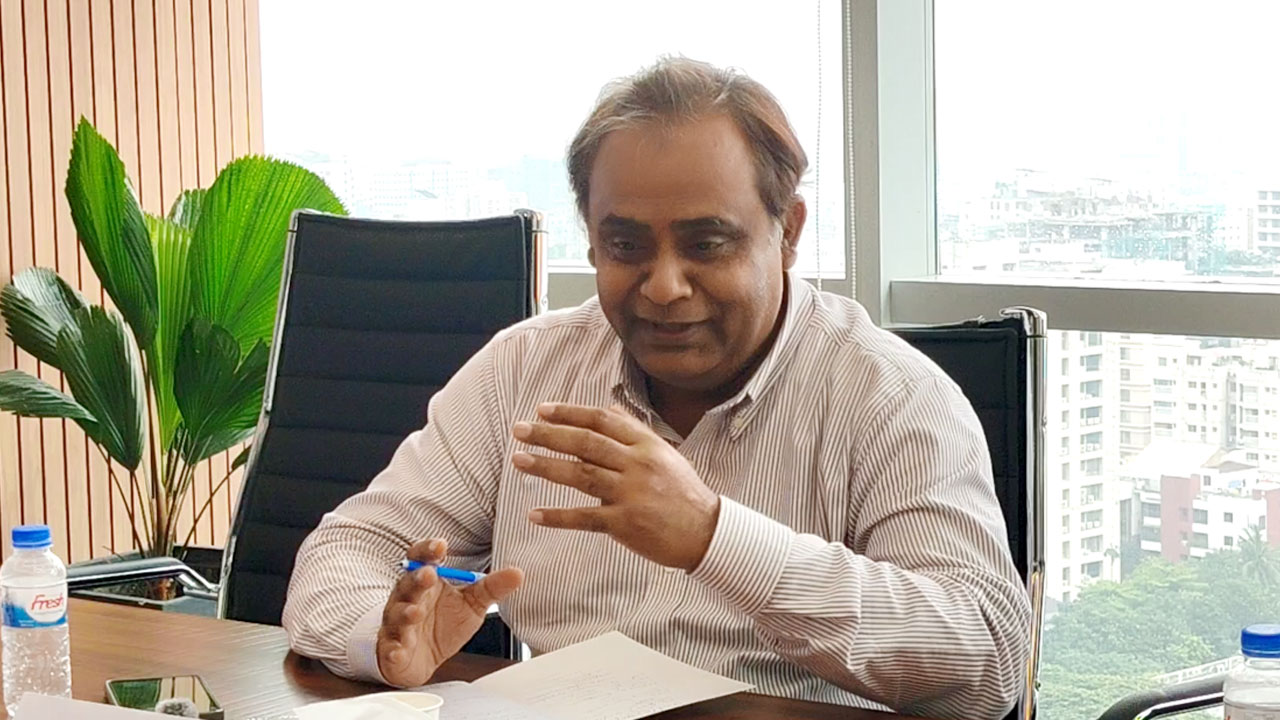
Bangladesh is being pushed towards a dangerous “debt-dependent poor economy” due to the blind following of prescriptions offered by international development agencies, warned Dr M Rokonuzzaman, a researcher on technology, innovation and policy, academic and activist. He said that by designing development plans based on foreign loan frameworks without considering local realities, the country is witnessing rising educated unemployment and an increasingly heavy external debt burden.
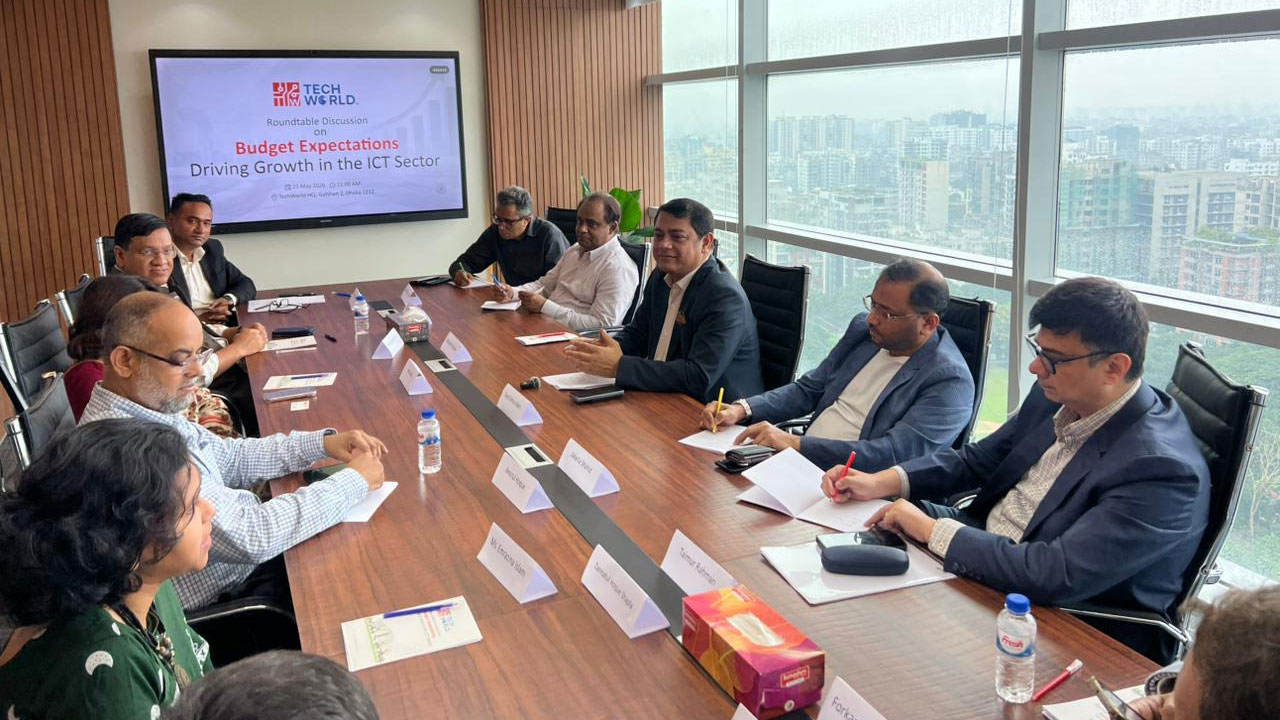
The North South University professor made the remarks at a roundtable discussion organised by TechWorld Bangladesh on Thursday (21 May), ahead of the national budget for FY2026–27, where stakeholders from the ICT sector discussed the structural weaknesses of the country’s economic and industrial model.
An economy trapped in debt
At the roundtable, Dr Rokonuzzaman said international loan frameworks and donor-driven formulas are dominating policymaking in Bangladesh. As a result, the country is adopting development models and projects that ultimately make it more dependent rather than self-reliant.
He noted that when a country follows a roadmap designed by others, true prosperity becomes difficult to achieve. While foreign loans finance infrastructure development, the absence of corresponding income-generation capacity or repayment mechanisms exposes the economy to long-term risks.
Educated unemployment and job market challenges
One of the clearest signs of the failure of the current development model, he said, is the rising number of educated unemployed youth.
Dr Rokonuzzaman argued that employment and industrial models prescribed by international agencies are not suitable for Bangladesh’s context.
Every year, thousands of graduates are produced, yet suitable employment opportunities are not created for them. The core issue, he said, is that the country’s industrial structure is heavily dependent on low-cost labour, which is unable to meet the expectations and aspirations of highly educated youth.
Risks of blind technology import
The academic issued a strong warning regarding technology and industrialisation, saying Bangladesh is increasingly relying on unchecked imports of foreign technology and machinery in the name of development.
He said such imports generate minimal value addition, as the country largely assembles imported components rather than developing or innovating them. This leads to significant outflow of foreign currency while failing to build domestic technological capacity or innovation ecosystems. If this trend continues, Bangladesh risks remaining a consumer of technology rather than becoming an innovator, he cautioned.
Lessons from Japan and South Korea
Citing Japan and South Korea as examples, Dr Rokonuzzaman said these countries did not rely on donor prescriptions or external loan-driven models for development.
Instead, they built their own development pathways through domestic capacity, long-term research, and innovation. He said Bangladesh must design an economic model aligned with its own resources and capabilities if it aims to become a smart nation. There is no global example of sustainable development achieved by copying external models, he added.
End of cheap labour advantage
Bangladesh has long used cheap labour as a key attraction for investment, but Dr Rokonuzzaman warned that this advantage is rapidly disappearing in the era of the Fourth Industrial Revolution and artificial intelligence.
Automation is increasingly replacing human labour, he said. If the country continues to rely on cheap labour-driven industrialisation, it risks being left behind in global competition. He stressed the need to shift focus towards developing skilled human resources capable of enhancing productivity through modern technology.
Caution on component manufacturing investments
While the government is encouraging investment in component manufacturing industries, Dr Rokonuzzaman urged caution.
He said large-scale blind investment in all types of component manufacturing is not a wise strategy.
Investment decisions must be based on careful assessment of global demand trends and Bangladesh’s comparative advantages. Otherwise, there is a risk of investing heavily in products whose markets may decline or become obsolete due to rapid technological change.
The budget must reflect the national development vision
The upcoming FY2026–27 budget should not be treated as a routine statement of income and expenditure, he said. Instead, it must provide a long-term roadmap for industrial and technological development.
He called for reducing dependency on foreign loans and clearly reflecting strategies to maximise domestic resources and intellectual capacity. Urging bold policy decisions, he said it is time to move beyond donor-driven formulas and fully implement a “Made in Bangladesh” vision.
Dr Rokonuzzaman warned that unless Bangladesh fundamentally changes its development philosophy now, the dream of building a new Bangladesh will remain an expensive illusion. He stressed that a sustainable and self-reliant future can only be achieved through homegrown thinking, research, and development strategies rooted in local realities.