AI Is Changing How People Search, Shop and Interact Online

News Desk
04 June 2026, 17:37
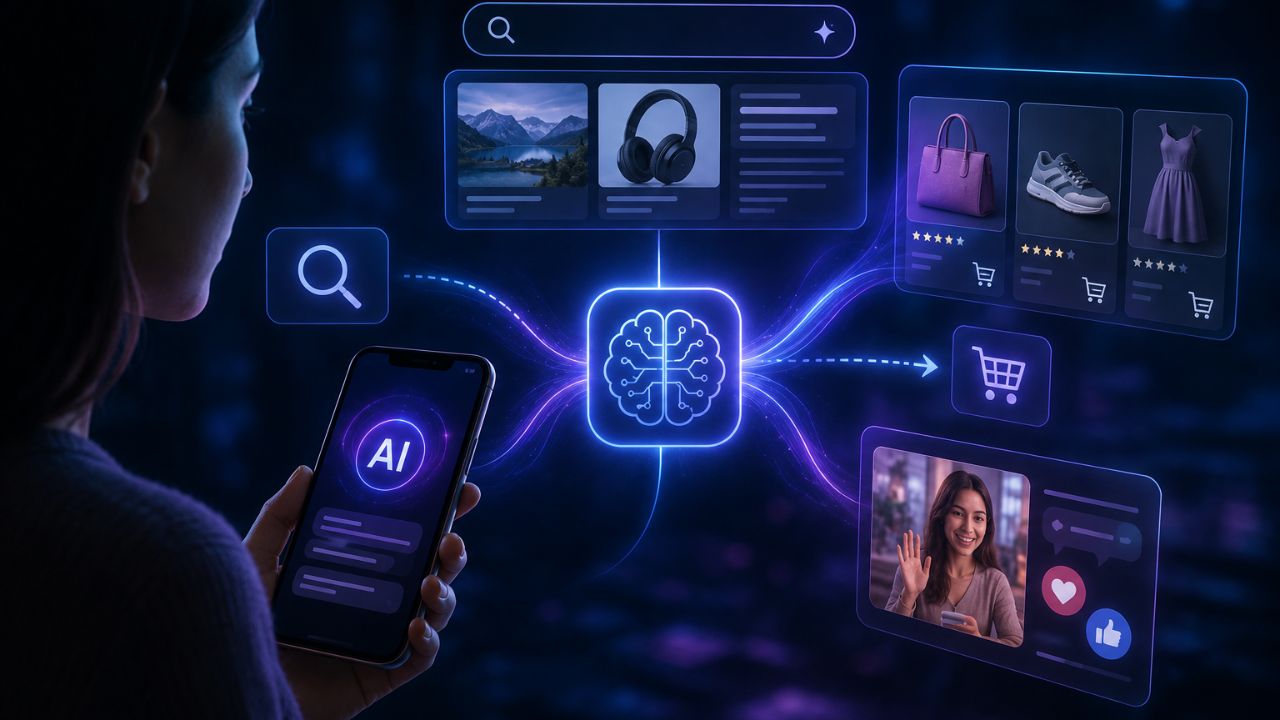
Artificial intelligence is rapidly transforming the internet, changing how people search for information, interact on social media, and shop online. As AI tools become more deeply integrated into everyday digital experiences, technology companies are redesigning their platforms to match changing user behavior.
The shift is particularly visible in online search, where users are increasingly asking longer and more complex questions rather than relying on traditional keyword-based searches.
According to Robby Stein, Vice President of Product for Google Search, people are now seeking answers to questions that often do not exist in a single webpage or source. "People are asking much longer and harder questions that no longer have a clear response anywhere on the internet," Stein told CNN. The trend is one reason behind Google's biggest search overhaul in more than two decades.
Search Is Becoming More Conversational
At its annual developer conference, Google introduced several AI-powered search features designed to handle more complex requests.
Among the updates are tools that can generate custom visuals, interactive graphics, and mini applications directly within search results by combining information from multiple online sources.
Google has also redesigned its search interface to better support longer queries and multimodal searches involving photos, documents, and browser tabs.
According to the company, searches involving images or screen-based interactions have grown by 60% year-over-year.
Meanwhile, usage of Google's AI Mode - a version of Search designed for conversational interactions - has more than doubled every quarter since its launch. Google says AI Mode queries are now roughly three times longer than traditional searches.
Research from marketing analytics firm Semrush suggests AI chatbots are also influencing how people search online. The share of searches containing 11 words or more has increased, while conversational-style searches have become significantly more common.
Industry experts say services such as ChatGPT have effectively trained users to communicate with search engines in a more natural way.
AI Apps Are Changing Information Discovery
While Google remains the dominant gateway to information, AI assistants are becoming an increasingly important starting point for online research.
According to Semrush, many users now switch between Google and AI tools such as ChatGPT depending on the task.
Google is often used for direct answers, navigation, and transactions, while AI assistants are frequently used for summarizing information, comparing options, brainstorming ideas, and creating content drafts.
The growing overlap between search engines and AI chatbots is intensifying competition among technology companies as they seek to become users' primary source of information.
Virtual Influencers Gain Popularity
Artificial intelligence is also reshaping social media. AI-generated personalities such as Aitana Lopez, Lil Miquela, Lu do Magalu, and Granny Spills have attracted large online followings despite not being real people. Brands are increasingly partnering with virtual influencers because they can be customized for campaigns and often cost less than celebrity creators.
According to social media agency Billion Dollar Boy, nearly 80% of marketers increased spending on creator content that uses generative AI over the past year.
Technology companies are further accelerating this trend. Meta is expanding AI features across Facebook, Instagram, and WhatsApp, while Google recently introduced tools that allow users to create realistic AI-generated avatars.
The New Battleground: AI-Powered Shopping
Online shopping is emerging as another major area of AI competition. Adobe reported that traffic from AI services to US retail websites surged 393% year-over-year during the first quarter of 2026.
Major technology companies, including Google, Amazon, Meta, and OpenAI, are investing heavily in AI shopping assistants that help consumers compare products, analyze prices, and make purchasing decisions.
Google recently unveiled a universal shopping cart that can combine products from multiple online retailers, while Amazon integrated its AI shopping assistant Rufus into a broader shopping experience powered by Alexa. These tools aim to reduce the time consumers spend researching products before making a purchase.
The Future of the Web
Despite concerns that AI-generated answers could reduce website traffic, technology companies argue that quality websites remain essential because AI systems still rely on information created by publishers, businesses, and independent creators.
However, website owners and marketers are already seeing changes in user behavior. Some report lower overall traffic but higher-quality visitors who are more likely to make purchases, request services, or complete transactions.
As AI becomes increasingly integrated into search engines, social networks, and e-commerce platforms, experts believe the internet is entering a new phase where artificial intelligence will play a central role in how people discover information and interact online.
For users, the transition may happen gradually. But for technology companies, content creators, and businesses, adapting to the AI-driven internet is becoming a necessity rather than an option.