New Year 2026: New Hope for Bangladesh’s Tech Future

Staff Reporter
31 December 2025, 20:20
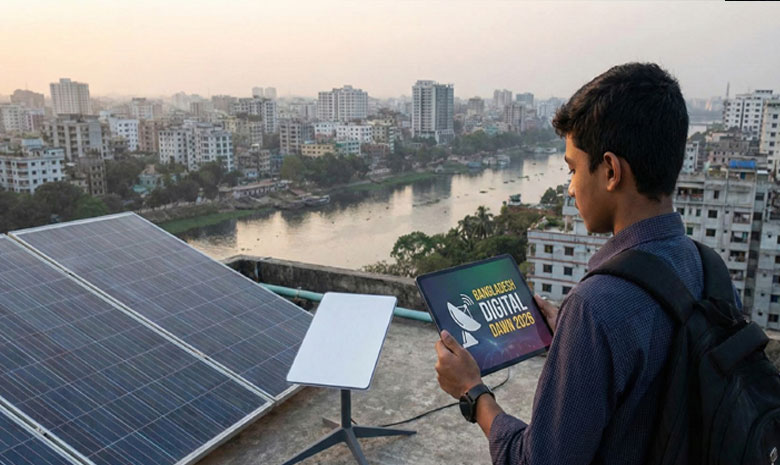
As Bangladesh prepares to welcome 2026, the country’s ICT (Information and communications technology) sector stands at a critical turning point, capped by a year of sweeping reforms and renewed ambition for digital progress.
In the year now ending, the government overhauled telecom licensing, amended decades-old surveillance laws, fast-tracked satellite internet through Starlink and revived long-delayed plans to block unauthorised handsets via the National Equipment Identity Register (NEIR). Policymakers say these steps are meant to put the sector on a higher growth track; industry voices warn the transition must be managed with care.
The centrepiece of this reset is the new Telecommunication Licensing Policy, approved in September. It replaces more than 20 licence categories with four core types — access networks, national infrastructure, international connectivity and non-terrestrial networks — while shifting many telecom-enabled services to simple registration.
Mobile, internet, satellite and submarine cable operators will all be folded into this framework, with legacy licences such as international internet gateway and interconnection exchange allowed to expire, most by 2027. Guidelines are drafted and awaiting approval, according to the Bangladesh Telecommunication Regulatory Commission (BTRC).
Another landmark step came with the Bangladesh Telecommunication (Amendment) Ordinance, 2025, which formally bars state-led internet shutdowns and introduces limited safeguards around lawful interception. It replaces the National Telecommunication Monitoring Centre with a new Centre for Information Support, narrows interception grounds to security, law and order, emergencies and judicial needs, and restores some licensing authority to BTRC—though Bari cautions that accountability clauses must not erode regulatory independence.
Contentious measures have also advanced. NEIR, revived amid protests from small handset traders, aims to curb grey-market phones that still account for an estimated 50–60 percent of sales. Enforcement has been pushed back to late March, with registration extended to year-end and a pledge that no handsets will be disconnected before the system goes live.
Perhaps the most visible change for users has been the rapid arrival of Starlink. The satellite operator secured its licence on April 29, began tests in May and launched services on May 20, with residential packages priced at Tk 6,000 and Tk 4,200.
As 2025 ends, the sector sits between upheaval and opportunity. The coming year will test whether Bangladesh can turn bold regulatory change, new connectivity options and tighter governance into a more inclusive, innovative and secure digital future—one in which technology fuels growth while protecting citizens’ rights.