Overtaking US Rival El Capitan
China's LineShine Becomes World's Fastest Supercomputer

News Desk
25 June 2026, 14:59
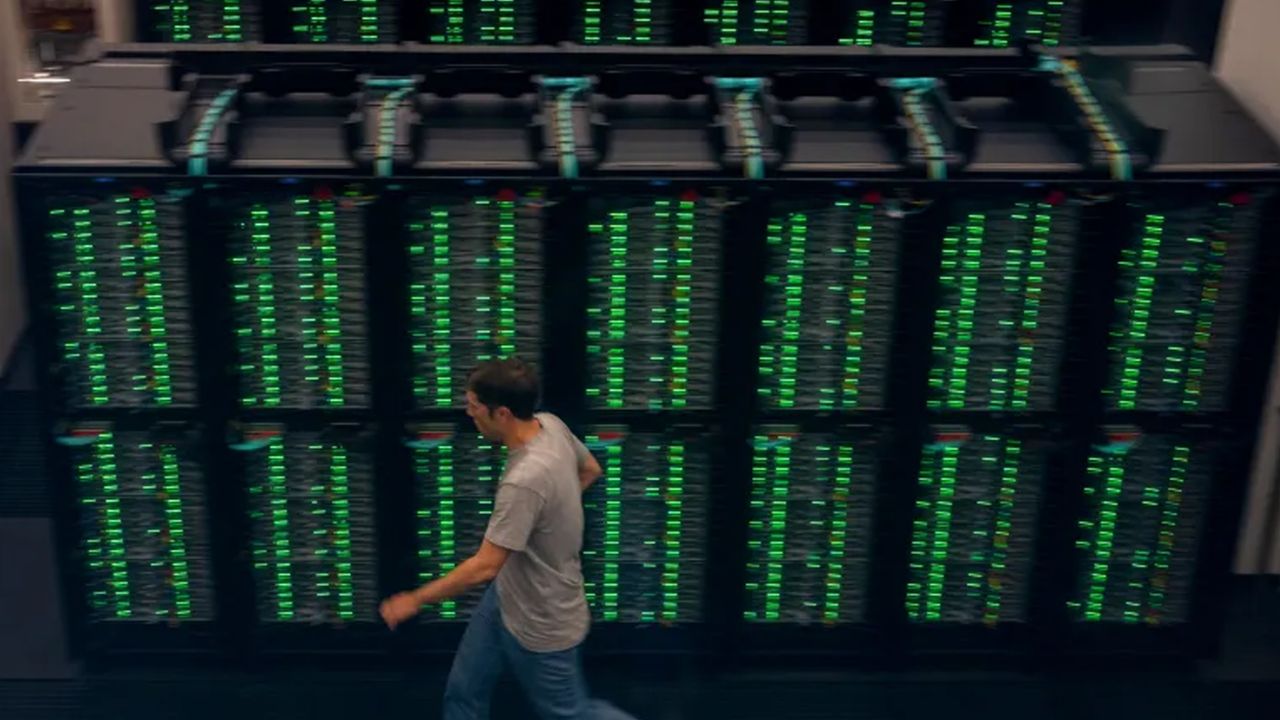
China has reclaimed the top position in global supercomputing after its newly unveiled LineShine system was ranked the world's fastest supercomputer, surpassing the United States' El Capitan in the latest TOP500 rankings released at the International Supercomputing Conference (ISC) in Hamburg, Germany.
Installed at the National Supercomputing Centre in Shenzhen, LineShine achieved a performance of 2.198 exaflops on the High Performance Linpack (HPL) benchmark, making it the first publicly ranked supercomputer to exceed two exaflops of sustained double-precision computing performance using only CPUs. The system outperformed El Capitan by more than 20%, ending the U.S. machine's reign at the top of the ranking.
The achievement marks China's return to the top of the TOP500 list for the first time since Sunway TaihuLight held the No. 1 position in 2017.
A Major Milestone for China's Technology Ambitions
One of the most significant aspects of LineShine is that it was built using domestically developed technologies, including Chinese-designed processors, networking systems, and software. The development comes amid years of U.S. export restrictions aimed at limiting China's access to advanced semiconductor and high-performance computing technologies.
According to Jack Dongarra, a computer science professor and one of the founders of the TOP500 project, export controls have made access to certain technologies more difficult for China, but they have also encouraged greater investment in indigenous technology development.
The LineShine system is based on China's custom LingKun platform, featuring nearly 13.8 million processor cores connected through a proprietary interconnect network and running the Kylin operating system.
A Different Approach to High-Performance Computing
Unlike many of today's most powerful computing systems, which rely heavily on graphics processing units (GPUs) to accelerate workloads, LineShine achieved its record-breaking performance using a CPU-only architecture. Experts say this demonstrates that alternative approaches to supercomputing remain viable despite the growing dominance of GPU-based systems.
The system also topped the HPCG benchmark, a test designed to better reflect real-world scientific computing performance, further strengthening its position as a leading high-performance computing platform.
Supercomputing Leadership Doesn't Necessarily Mean AI Leadership
While the achievement is significant, some researchers caution against equating TOP500 leadership with dominance in artificial intelligence.
The TOP500 ranking primarily measures traditional scientific computing performance rather than AI training capabilities. Many of the world's largest AI computing infrastructures—including those operated by Microsoft, Amazon, Google, and xAI—do not participate in the ranking. As a result, the list does not fully reflect the computing power currently being deployed for large-scale AI development.
Reuters reported that LineShine ranked fourth in a benchmark more closely associated with AI workloads, highlighting the distinction between high-performance computing and AI-focused infrastructure.
Why It Matters
LineShine's rise to the top of the global rankings underscores China's continued progress in advanced computing despite external technology restrictions. It also highlights the growing strategic importance of supercomputing in areas such as scientific research, climate modeling, aerospace engineering, nuclear simulations, and national security.
At a broader level, the achievement reflects the intensifying technological competition between China and the United States, particularly in high-performance computing and artificial intelligence. As both countries invest heavily in next-generation computing infrastructure, leadership in these fields is increasingly viewed as a key indicator of long-term technological and economic strength.
Looking Ahead
Although the United States continues to lead in several areas of AI development, China's latest supercomputing breakthrough demonstrates its ability to build world-class computing systems using domestically developed technologies. Whether that momentum translates into broader leadership in AI remains an open question, but LineShine's debut at the top of the TOP500 ranking signals that the global competition for computing supremacy is far from over.