The 10 GBPS Backbone

News Desk
25 June 2026, 14:44
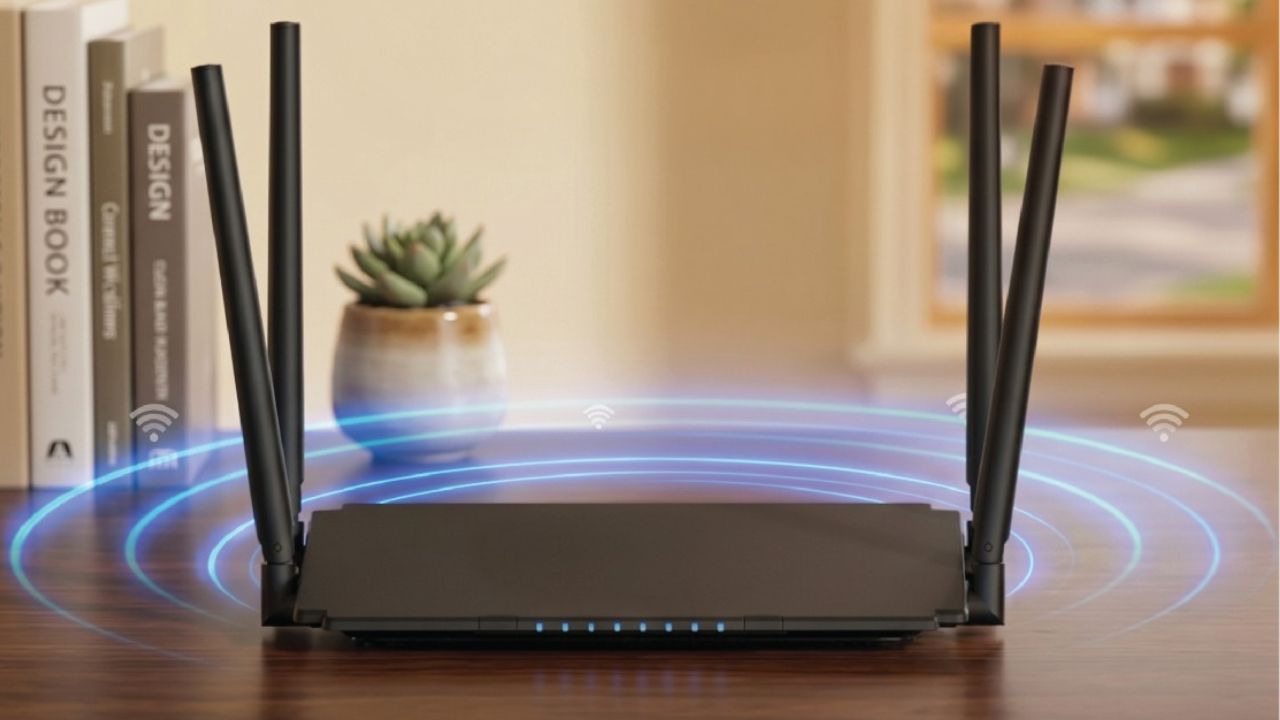
The World Cup does something strange to a home network. On an ordinary night, the router sits quietly in a corner, and nobody thinks about it. On a match night, the same box is suddenly expected to carry the living room TV, two or three phones, a laptop, a smart speaker, and maybe even a gaming console, all at once. In Bangladesh, that pressure is only going to rise as streaming becomes the default way to watch the tournament in 2026.
That is where the idea of a 10Gbps backbone comes in. Not every house in Dhaka, Chattogram, or Sylhet will actually run a 10Gbps line to the living room, but the direction of the market is clear. Home networking is moving toward multi-gigabit equipment, stronger mesh systems, and Wi-Fi 7 routers that are built to handle more devices with less lag. Wi-Fi 7 promises wider channels, lower latency, and better performance in crowded environments, which is exactly what a World Cup streaming night creates.
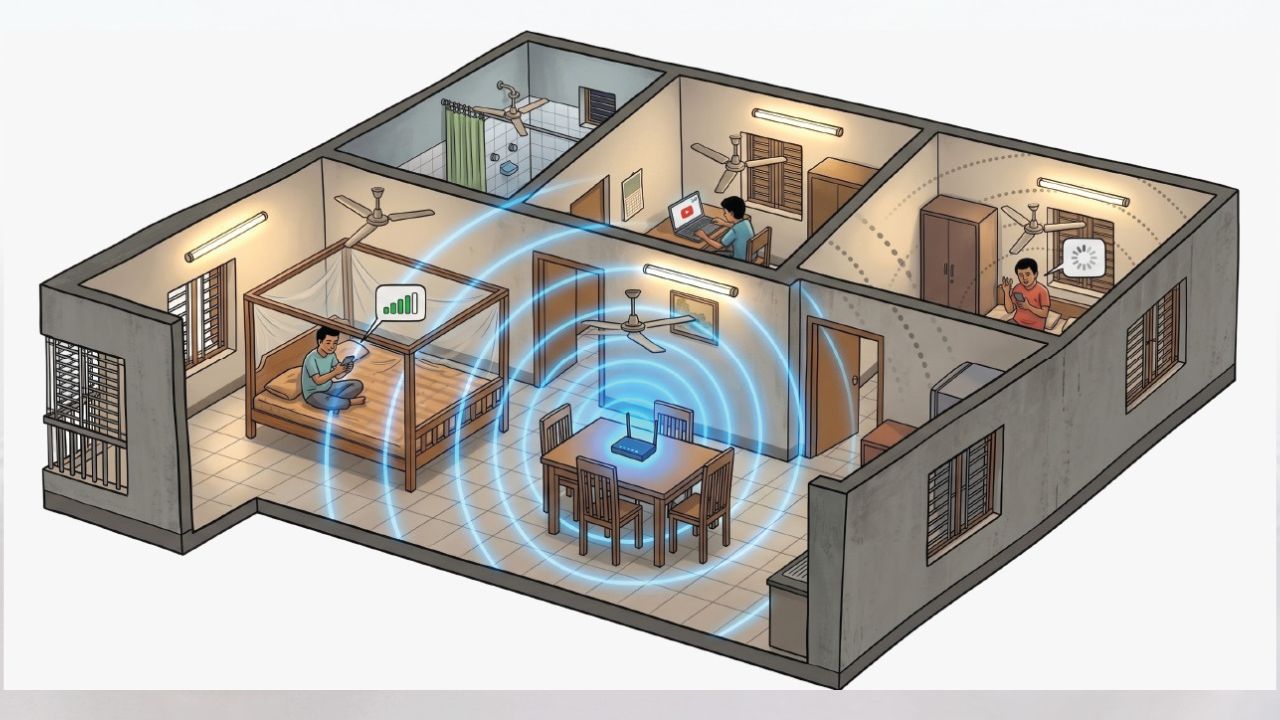
The key point is simple. Internet speed alone does not decide whether a stream feels smooth. A household can have a decent broadband plan and still suffer buffering if the router is weak, the Wi-Fi band is congested, or the signal has to pass through thick concrete walls. In a typical Bangladeshi apartment, that is often the real problem. A shiny ISP package cannot save a poor wireless setup.
That is why Wi-Fi 7 matters more than the spec sheet suggests. It is not just top speed. It is about keeping a stream stable when the network is busy. It is about letting one device watch in 4K while another downloads updates and a third opens social media clips without causing the whole connection to wobble. TP-Link’s Wi-Fi 7 positioning highlights features like 320 MHz channels, Multi-Link Operation, and higher theoretical throughput, which are meant to reduce contention and improve responsiveness in dense environments.
The Bangladesh retail market is already showing that shift. Star Tech currently lists a range of Wi-Fi 7 routers and mesh systems, including TP-Link Archer BE400, BE450, BE550, BE805, BE900, and Deco BE22. Ryans also lists Wi-Fi 7 options such as Archer BE550, Archer BE800, Archer BE900, Archer GE800, and ASUS ZenWiFi BQ16 Pro. That matters because the category is no longer theoretical. It is already in the shops.For a feature like this, the best way to understand the hardware is to think in usage tiers.
At the entry level, a router like the Archer BE400 or BE450 makes sense for small apartments and lighter streaming households. These are the models for families that want a future-ready upgrade without stepping into flagship pricing. They are not built to dominate a huge home, but they are enough to reduce everyday congestion and give a noticeable lift over older Wi-Fi 5 or early Wi-Fi 6 gear. Star Tech currently lists these models in the local market, which shows that Wi-Fi 7 is already filtering down from premium novelty to practical retail choice.
Move one step up, and the picture becomes more interesting. The Archer BE550 is the sort of router that starts to feel like a real-World Cup night candidate. Ryans lists it as a Wi-Fi 7 router with multi-gig class positioning and support for large homes, which makes it a stronger fit for households with multiple screens and heavier evening use. This is the tier where a family can watch one match on the TV, stream highlights on phones, and still keep the connection usable for work or study in another room.
Then there is the premium tier. The Archer BE800 and Archer BE900 are not just consumer routers. They are statement hardware. Ryans positions the BE800 as a Wi-Fi 7 router for heavy streaming, gaming, and conferencing. Star Tech lists the BE900 as a quad-band Wi-Fi 7 router with 10G-class connectivity and a very high-performance feature set. These are the devices that belong in a serious power-user setup, where the goal is not just to “get online” but to remove the router as a source of friction altogether.
Mesh systems also deserve a place in this story. The Deco BE22, listed by Star Tech, is important because many Bangladeshi homes do not fail because the internet is too slow. They fail because the signal cannot travel properly from one room to another. Concrete walls, long layouts, and multi-floor homes create dead zones. A mesh system is often a more sensible upgrade than a single expensive router, because it solves coverage rather than chasing raw numbers. Star Tech’s listing of the Deco BE22 in single and multi-pack versions suggests exactly that kind of practical use case.
Here is the real benchmark. On a World Cup night, a strong Wi-Fi 7 setup should handle a 4K TV stream in one room while phones, laptops, and smart devices stay active elsewhere without noticeable hesitation. A weaker setup will show its limits quickly. The first sign is not usually a full drop in speed. It is a small delay. A second of hesitation before playback starts. A lag when someone walks to the far side of the house. A pause when too many devices join the network at once. That is how real-world stress appears in ordinary homes.
This is also why the “10Gbps backbone” idea is useful. It is a way of saying that the future home network should be built as a system, not as a single device purchase. The ISP line, the ONU, the router, the mesh nodes, the Ethernet cabling, and the client devices all need to work together. A fast router cannot fully fix a weak upstream connection. A strong fiber line cannot help if the Wi-Fi layer is overloaded. The network has to be designed as one chain.
For Bangladesh, the most realistic buying advice is not to chase the most expensive model on the shelf. It is to match the hardware to the house. A small flat may only need a mid-range Wi-Fi 7 router. A larger family home may benefit more from mesh. A high-end user with multi-gig broadband, a smart TV, a gaming setup, and several active devices may justify a flagship unit like the BE800 or BE900. The important thing is to buy for the traffic pattern, not for the box on the shelf.
That is what the 2026 World Cup will expose. Not only who has the fastest broadband plan, but who has built a home network that can actually use it. In that sense, the stadium is no longer the only Venue. The real test may happen at home, right in front of the router.