From Phone to Pocket Computer: The Lasting Legacy of the iPhone

News Desk
29 June 2026, 13:54
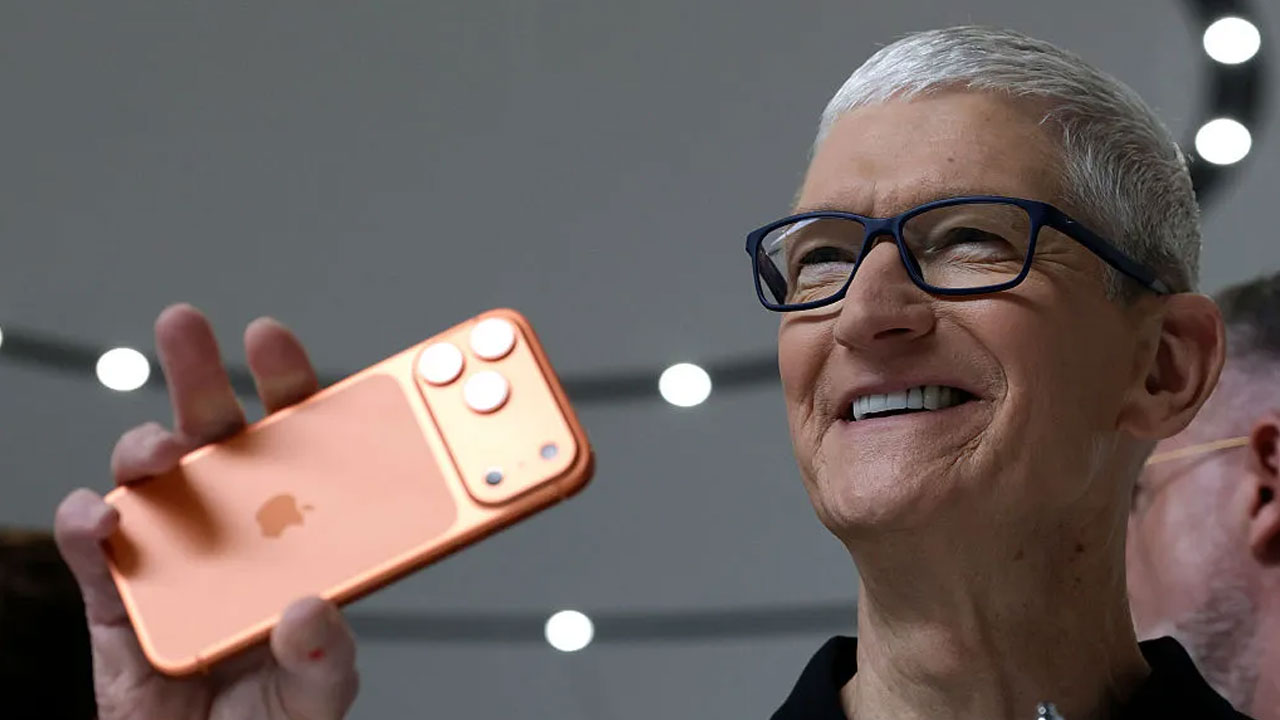
On the evening of June 29, 2007, people lined up outside Apple Stores across the United States for a product few had ever held, but many believed would change technology forever.
There were no livestreams, influencer reviews or social media countdowns. Apple simply announced that the iPhone would go on sale at 6 p.m., stores would remain open until midnight, and customers could purchase up to two devices on a first-come, first-served basis.
Nineteen years later, that modest launch is widely regarded as one of the defining moments in consumer technology.
The original iPhone did far more than introduce another mobile phone. It fundamentally changed how people communicate, work, create content, navigate the world, shop, make payments and access information. More importantly, it transformed the smartphone into the primary computing device for billions of people.
The Device That Replaced a Pocket Full of Gadgets
By today's standards, the first iPhone was remarkably limited. It lacked an App Store, copy-and-paste functionality and 3G connectivity. Its 2-megapixel camera would be considered basic even by entry-level smartphones today.
Yet its significance had little to do with specifications. Apple introduced a device that treated software as the heart of the user experience rather than the hardware itself. The iPhone was essentially a handheld computer that happened to make phone calls.
As smartphones evolved, they steadily absorbed the roles of countless standalone devices. MP3 players, compact digital cameras, GPS navigators, calculators, alarm clocks, flashlights, voice recorders and portable media players gradually disappeared from everyday life. Boarding passes, tickets, bank cards and even wallets increasingly moved into a single device carried in every pocket.
The iPhone did not invent many of these technologies. Instead, it combined them into a single product so effectively that carrying separate devices became unnecessary.
Redefining the Digital Economy
The impact extended well beyond consumer electronics.
Smartphone cameras made photography accessible to almost everyone. Social media platforms flourished because billions of people could instantly capture and upload photos and videos. The creator economy, ride-hailing services, food delivery platforms, mobile banking and digital commerce all expanded alongside increasingly capable smartphones.
Entire industries adapted to a world where customers expected every service to be available through a mobile app. Banks invested in digital platforms alongside physical branches. Retail shifted toward mobile shopping. Navigation apps replaced paper maps, while messaging and video calling became everyday habits rather than specialised services.
For many small businesses, the smartphone also became a portable office, payment terminal, camera, marketing platform and communication tool - all in one device.
A Lasting Influence in the AI Era
Today, new iPhone launches are often judged by incremental improvements, whether faster processors, better cameras or new artificial intelligence features.
That perspective can overlook the device's broader legacy.
The iPhone's greatest contribution was changing humanity's relationship with computing. Before smartphones, using a computer usually meant sitting at a desk. The iPhone made computing constant, portable and always within reach.
That shift continues to shape today's AI era.
From voice assistants and live translation to visual search and on-device AI features, smartphones remain the primary way billions of people interact with artificial intelligence. While AI may define the next chapter of technology, it is still the smartphone - an idea popularised by the iPhone - that serves as its main gateway.
Apple has sold billions of iPhones since 2007, helping transform the company into one of the world's most valuable businesses while inspiring an industry that now ships well over a billion smartphones each year.
Yet the iPhone's legacy cannot be measured by sales alone. It lives in countless everyday moments: parents capturing their children's first steps, travellers finding their way through unfamiliar cities, students carrying entire libraries in their pockets, entrepreneurs running businesses from a handset, and ordinary citizens documenting history as it unfolds.
Those experiences have become so commonplace that they no longer feel extraordinary. Perhaps that is the iPhone's greatest achievement. It made revolutionary technology feel routine.
Back in June 2007, Apple's announcement focused on extended store hours, Genius Bar appointments and customer workshops. It said little about reshaping modern life. History did the rest.