China Reclaims World's Fastest Supercomputer Title Despite US Chip Curbs

News Desk
29 June 2026, 18:18
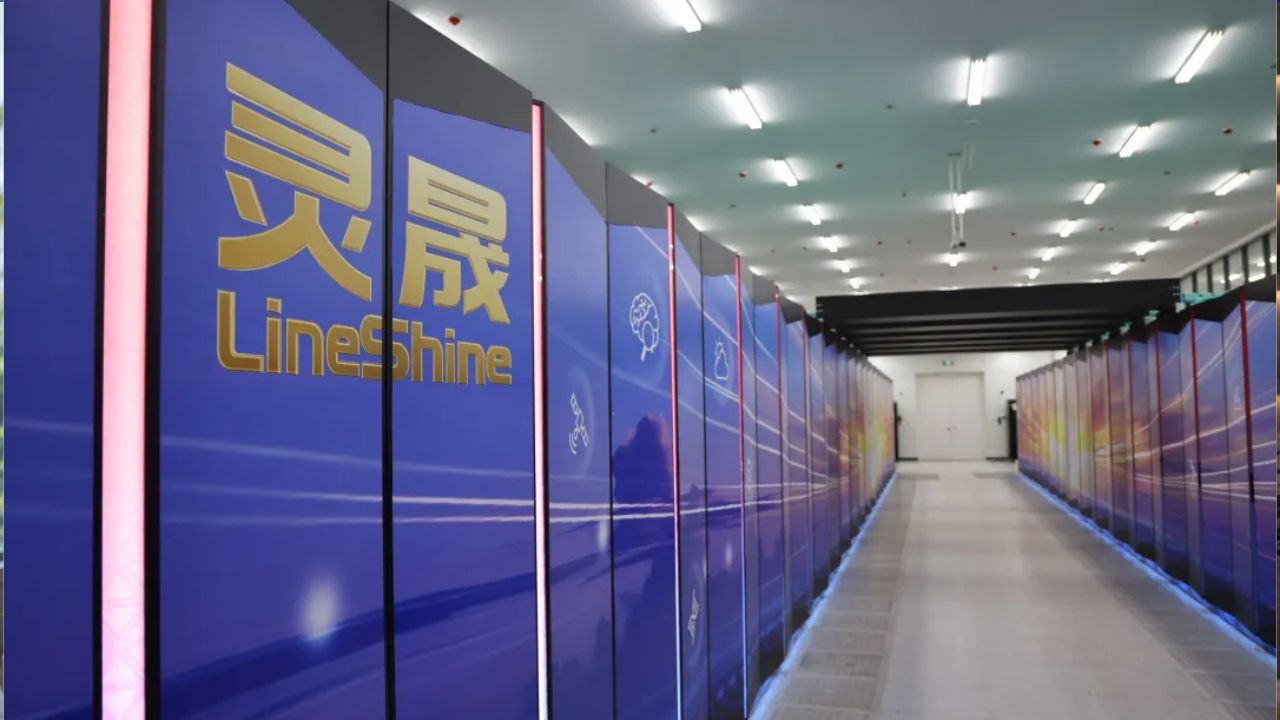
China has reclaimed the title of the world's fastest supercomputer, ending the United States' lead despite years of U.S. restrictions on the export of advanced chips and high-performance computing technologies.
According to the latest TOP500 rankings, China's LineShine has overtaken the U.S. supercomputer El Capitan to become the world's most powerful computing system. The achievement marks China's return to the top of the global rankings for the first time since 2018 and highlights the country's growing ability to develop cutting-edge computing technology using domestically designed hardware.
CPU-Based Design Defies Industry Trend
Unlike most of today's fastest supercomputers, which rely heavily on graphics processing units (GPUs) for high-performance computing and AI workloads, LineShine is built entirely on CPUs.
The system uses around 45,000 domestically developed LX2 processors, each featuring 304 cores running at 1.55GHz. The processors are connected through LingQi, a high-speed, low-latency interconnect that enables efficient communication across the massive computing cluster.
The CPU-only architecture is particularly notable because U.S. export restrictions have significantly limited China's access to advanced AI GPUs from companies such as Nvidia. Instead of relying on foreign accelerators, China has focused on developing its own processors and optimizing CPU-based performance.
Surpassing the 2 Exaflop Milestone
LineShine is the first supercomputer to exceed 2,000 exaflops, or more than 2 quintillion calculations per second. According to the TOP500 benchmark, it delivers around 20% more computing performance than El Capitan, which now ranks second.
Although China has regained the top position, the United States continues to dominate the broader rankings, with three of the world's five fastest supercomputers.
Higher Performance Comes at a Cost
The performance gain comes with increased power consumption.
LineShine requires approximately 42.2 megawatts of electricity to operate, compared with 29.7 megawatts for El Capitan. As a result, the Chinese system is less energy-efficient than its U.S. counterpart, despite its higher processing speed.
More Than a Technical Achievement
Beyond breaking performance records, LineShine represents a strategic milestone in China's technological ambitions.
The United States has spent recent years tightening export controls on advanced semiconductors and AI hardware in an effort to slow China's technological progress. LineShine demonstrates that China is continuing to advance high-performance computing by developing alternative technologies and reducing its dependence on foreign chipmakers.
The latest TOP500 rankings underscore that competition between China and the United States is no longer centered solely on AI models, but increasingly on the computing infrastructure that powers them.