Inside the Engineering Powering Today’s Formula 1 Cars

Syed Armaan Ahsan
20 November 2025, 12:53
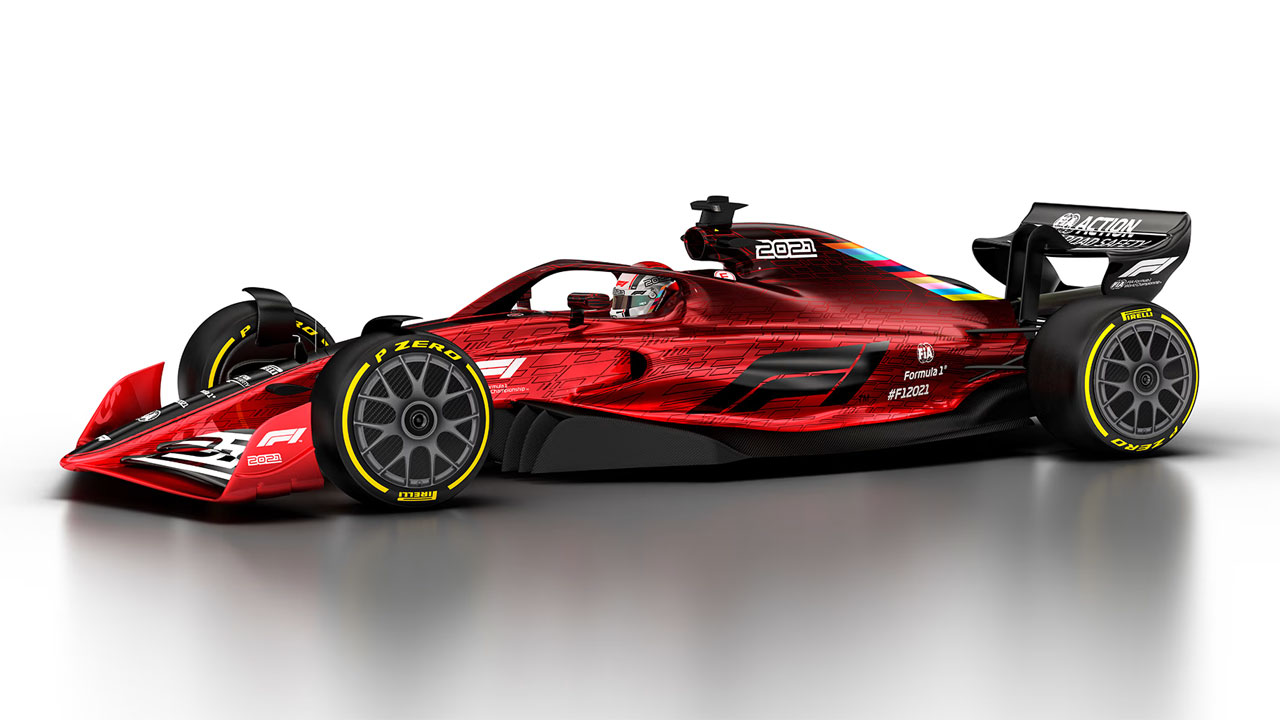
Speed alone no longer defines success in Formula 1. The modern F1 car is a finely balanced engineering system in which aerodynamics, hybrid power, tyre performance and data-driven electronics work together with extraordinary precision. Every lap hinges on decisions that determine how effectively the car accelerates, corners and withstands sustained loads at high speed.
A Carbon-Fibre Core: Chassis and Monocoque
At the centre of every Formula 1 car is the carbon-fibre monocoque, a single, ultra-rigid survival cell that houses the driver. All major components — including the front and rear suspension, the power unit and key electronic systems — attach directly to this structure. It must remain exceptionally light yet stiff enough to resist flexing under aerodynamic forces and cornering loads, ensuring predictable handling from lap to lap.
The monocoque also serves as the primary safety cell. Before a car is cleared to compete, the FIA subjects it to rigorous impact, penetration and load tests to verify crash protection — a process fundamental to modern F1 safety standards.
Aerodynamics and the Pursuit of Downforce
Aerodynamics contribute more lap time advantage than any other element of F1 design. Teams shape airflow to generate downforce, pressing the car into the track and increasing grip during high-speed cornering.
Front Wing
The front wing is the car’s first point of contact with the air. Its multiple elements channel airflow around the tyres and toward the floor and sidepods. Even slight changes in wing angle can influence balance, steering response and overall stability.
Floor and Venturi Tunnels
Most of the car’s downforce now comes from the underfloor. Venturi-style tunnels accelerate air beneath the chassis, creating a low-pressure region that effectively pulls the car downward. This ground-effect system delivers significant grip with relatively low drag — an essential advantage in modern racing.
Rear Wing and DRS
The rear wing provides stability during high-speed cornering and braking. On straights, the Drag Reduction System (DRS) opens a flap to decrease drag, improving top speed and enabling closer racing. Teams continually adjust wing levels, bodywork surfaces and ride heights to suit each circuit’s balance of slow corners and long straights.
The Hybrid Power Unit
Today’s Formula 1 power unit combines a compact 1.6-litre turbocharged V6 with advanced hybrid systems. Total output can approach 1,000 horsepower while consuming far less fuel than previous generations.
Key components include:
- Internal Combustion Engine (ICE): A highly efficient turbocharged V6 operating at extreme RPM.
- MGU-K: Harvests kinetic energy during braking and redeploys it to boost acceleration.
- MGU-H: Captures thermal energy from exhaust gases and regulates turbocharger speed.
- Energy Store and Control Electronics: Manage the flow, storage and strategic use of hybrid power throughout a race.
Energy deployment is carefully planned, supporting overtakes, defensive driving and optimal corner exits.
Suspension, Tyres and Braking Systems
F1 suspension systems — often push-rod or pull-rod — are engineered primarily to stabilise aerodynamics. By controlling ride height, camber, toe and damping characteristics, teams ensure the tyres remain within their optimal temperature and grip window.
Tyre behaviour is one of the most sensitive elements of car performance. Overheated tyres degrade rapidly, while cold tyres struggle for grip. Managing tyre temperatures is a central challenge during stints, affecting lap times, strategy and safety.
The braking system relies on carbon discs and pads that function correctly only at temperatures often exceeding 1,000°C. Teams must balance cooling, brake wear and energy recovery, as a significant portion of braking force also regenerates electrical power through the MGU-K.
Electronics, Sensors and Live Telemetry
A modern Formula 1 car operates as a rolling data laboratory. Hundreds of sensors monitor brake temperatures, tyre wear, fuel flow, suspension movement, aerodynamic load and hybrid energy levels. This data is transmitted in real time to engineers who adjust engine modes, energy deployment, brake balance and other parameters as race conditions evolve.
The steering wheel serves as the driver’s command centre, featuring dozens of switches and rotary controls that allow for rapid changes while travelling at more than 300 km/h.
A Fully Integrated System
No single component explains the performance of a Formula 1 car. Aerodynamics influence tyre wear, cooling systems reshape airflow, and suspension geometry affects ground-effect efficiency. Each design decision interacts with others, forming a tightly integrated system aimed at converting engine power into competitive lap times with minimal energy loss.