Egypt opens first phase of driverless monorail

News Desk
03 June 2026, 11:13
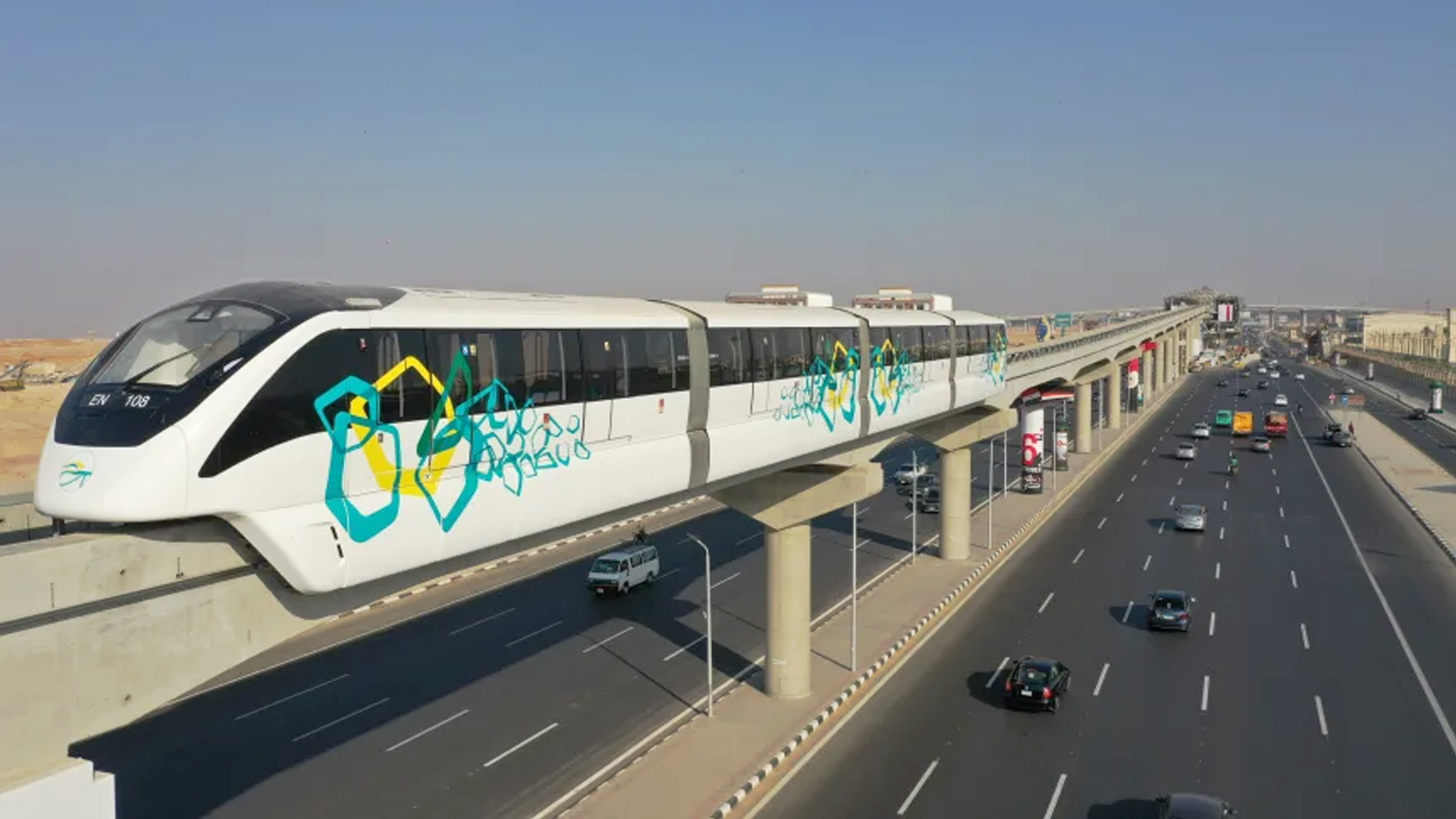
June 3 (TechWorld) - Egypt has opened the first phase of Africa's first driverless monorail network, a flagship infrastructure project aimed at connecting Cairo with the country's New Administrative Capital and easing chronic traffic congestion.
The Cairo Monorail began carrying passengers on May 6. Once fully completed, Egyptian authorities say the system will become the world's longest monorail network, spanning 100.3 kilometres (62 miles).
The first operational route, known as the East Nile line, stretches 56.5 kilometres (35 miles) from Cairo International Stadium in Cairo's Nasr City district to the New Administrative Capital east of Cairo. A second route, the 43.8-kilometre (27-mile) West Nile line linking 6th of October City and Giza, remains under construction.
Together, the two lines will cover 100.3 kilometres, surpassing the 98.5-kilometre monorail network in Chongqing, China. Egyptian authorities say the system is expected to serve around 500,000 passengers daily.
The project was launched in 2019 as Cairo's existing transport infrastructure struggled to keep pace with population growth. The city's three metro lines carry roughly 500 million passengers annually, while severe road congestion continues to burden commuters.
A consortium led by Alstom, alongside Orascom Construction and Arab Contractors, was awarded a contract worth about £2.3 billion ($3 billion) to build and operate the monorail system. The project also received partial financing from UK Export Finance.
The network will eventually operate 68 trains capable of carrying up to 45,000 passengers per hour in each direction. The fully automated trains can travel at speeds of up to 80 kilometres per hour and use radio-based communication systems to manage operations without drivers.
According to Alstom, the monorail produces lower emissions and less noise pollution than many conventional transport systems and can recover up to 99% of braking energy to reduce power consumption.
The system uses Alstom's Innovia platform, which is also deployed in cities including Bangkok, Singapore and Los Angeles. Six of the East Nile line's 22 stations have yet to open, while the consortium will operate and maintain the network for 30 years.
The project was originally scheduled to open in 2023 but faced multiple delays.
Some economists and analysts have questioned Egypt's spending on large-scale infrastructure projects during a period of economic pressure. The country invested around 1.7 trillion Egyptian pounds ($106.3 billion) in infrastructure development between 2023 and 2025, while external debt exceeded $163 billion in 2025.
Supporters argue that the monorail will improve connectivity and support the development of the New Administrative Capital. The government says the city will eventually house 6.5 million residents and create around 2 million jobs, although large parts of the development remain under construction.
Rami Salah Eldin described the East Nile Monorail as "a major milestone" in Egypt's Vision 2030 strategy for smart and sustainable urban transportation, noting that 98% of the project's workforce is Egyptian.
Alstom says the network could serve as a model for clean, high-capacity public transport in other rapidly urbanising African cities. The company is also involved in transport projects in Morocco, Côte d'Ivoire, Algeria and South Africa.
Source: CNN