Budget Expectations 2026-27
Demand to Tackle Payment Complexities in E-commerce & Digital Healthcare

News Desk
10 June 2026, 14:25

Bangladesh’s fast-growing digital economy - particularly the e-commerce and online healthcare sectors - is currently at a critical crossroads. On one hand, there are limitations in technological infrastructure; on the other, high tax burdens and foreign exchange shortages are creating complications in international payments. Combined, these challenges are leaving entrepreneurs in the sector struggling to navigate an increasingly difficult environment.
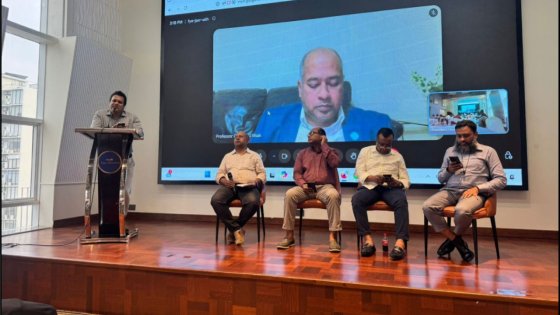
At a roundtable discussion organised by TechWorld Bangladesh on Thursday (May 21), with the participation of various stakeholders from the country’s ICT sector ahead of the FY2026-27 national budget, CEO of Shomvob Health Ltd., Azra Selim, highlighted the ground realities of the e-commerce and digital healthcare sectors.
She said that without adequate government support and reforms in the duty structure, the goal of building a “new Bangladesh” would remain elusive.
Dual Pressure of Infrastructure and Taxation
At the outset of her remarks, Azra Selim emphasised the need for strong and uninterrupted digital infrastructure. She said:
“For the expansion of digital commerce, online healthcare, or any internet-based service, strong and uninterrupted internet connectivity and a technological backbone are essential. However, the bigger obstacle is not infrastructure alone, but the current tax and VAT structure. In particular, increasing VAT on online transactions from 5 percent to 15 percent has placed immense pressure on the sector. Such a high VAT rate on a growing industry like e-commerce not only makes operations difficult but is also forcing many entrepreneurs to consider shutting down their businesses.”
High Cost of Capital and Investment Constraints
Access to capital remains a persistent challenge for startups and emerging entrepreneurs in Bangladesh. Azra Selim noted that most businesses in the country are built on very limited capital, and the cost of borrowing from banks and other sources is also high.
When high interest rates are combined with heavy tax burdens, sustaining a business becomes extremely difficult. She also raised concerns over the practical implementation of the VAT credit system, saying that in many cases, entrepreneurs are unable to fully benefit from it due to procedural complexities, which further increases their cost burden.
Dollar Shortage and Digital Marketing Challenges
Digital marketing is a key component of the e-commerce ecosystem, as businesses rely on international platforms to reach customers. While making payments to these platforms was once relatively easier, the ongoing dollar shortage has made the process significantly more complicated.
Azra Selim said that due to payment restrictions and the rising cost of foreign currency, digital marketing expenses have increased substantially compared to the past. As a result, small and medium entrepreneurs are finding it increasingly difficult to remain competitive and acquire new customers.
High Duties on Digital Healthcare Equipment
Representing the digital healthcare sector, Azra Selim also highlighted the issue of high import duties on medical and healthcare-related equipment.
She said, “Many essential healthcare and medical products are not manufactured in Bangladesh. When such necessary items are subjected to high import duties, their prices become unaffordable for ordinary people. The core objective of digital healthcare is to ensure affordable medical services at the doorstep of citizens. If duties on healthcare equipment are not kept at a reasonable level, it will not be possible to ensure affordable digital healthcare services for the general public.”
Cash on Delivery and Logistics Challenges
Logistics and delivery systems remain a major challenge for the growth of e-commerce in Bangladesh. According to Azra Selim, customers in the country still largely prefer cash-on-delivery payment methods.
This dependency significantly increases logistics costs. In many cases, products are returned if customers refuse to accept delivery, resulting in double transportation costs for sellers. She suggested that reducing reliance on cash-on-delivery would require wider adoption of digital payment systems, supported by policy incentives such as cashback schemes or other measures to encourage cashless transactions.
Employment Generation and Sector Potential
Despite these challenges, Azra Selim highlighted the significant employment potential of the e-commerce and digital services sector. She said that thousands of young people are already employed across the sector, including delivery personnel and technology professionals.
The government, she noted, also benefits from substantial direct and indirect tax and VAT revenues from the sector. Therefore, reducing the tax burden and providing incentives would not only support industry growth but also contribute positively to the broader national economy.
Budget Expectations and the Way Forward
Azra Selim made several recommendations for the upcoming budget, including reducing VAT on online transactions to a more reasonable level, introducing export-oriented support for the e-commerce sector, and offering tax incentives to attract foreign investment. “If we want to increase exports and reach global markets, we must first simplify the business environment for local entrepreneurs,” she said.
In conclusion, she added:
“E-commerce is no longer a city-centric luxury; it has become a necessity. Especially when sensitive services like healthcare are moving to digital platforms, the state must prioritise this sector. If the government supports the sector by reducing taxes and easing investment conditions, the dream of a new Bangladesh can truly be realised.”