Why Everyone Is Betting on Quantum

News Desk
30 June 2026, 10:31
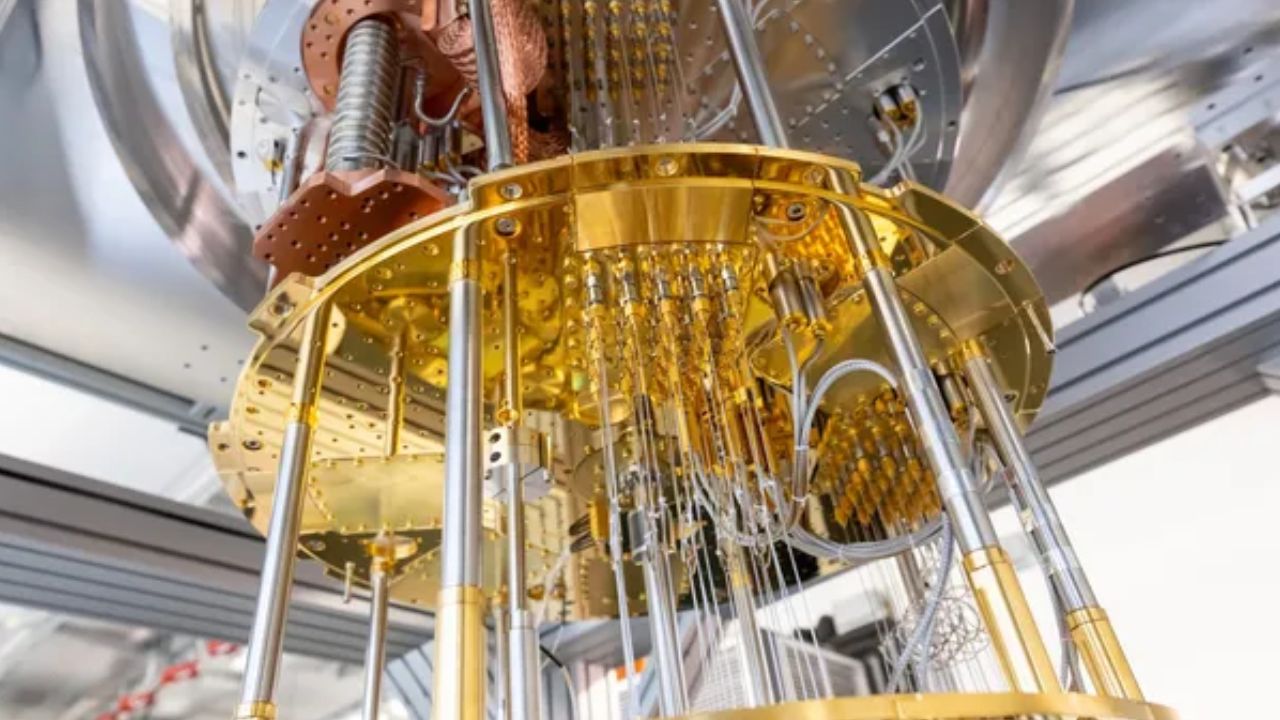
For decades, quantum computing was viewed as a futuristic concept with enormous potential but few practical applications. That perception is beginning to change. Advances in hardware, software, and error correction are bringing the technology closer to real-world use, prompting governments, technology companies, and investors to commit billions of dollars to its development.
Unlike conventional computers, which process information using bits that exist as either 0 or 1, quantum computers rely on quantum bits, or qubits. Through the principles of superposition and entanglement, qubits can represent multiple states at the same time and work together in ways that allow quantum systems to solve certain classes of problems far more efficiently than even the most powerful classical supercomputers.
The technology is particularly well suited to tackling problems involving vast numbers of possible outcomes. Researchers believe quantum computers could accelerate drug discovery, improve the design of advanced materials, optimize supply chains, enhance financial modeling, and simulate complex chemical reactions that are beyond the capabilities of today's conventional machines.
Despite the growing momentum, quantum computing remains an emerging technology. Building stable quantum systems is exceptionally difficult because qubits are highly sensitive to heat, vibration, and other forms of environmental interference. Even minor disturbances can introduce errors, making reliability one of the industry's biggest challenges. Researchers are therefore focused on improving qubit stability, scaling up quantum processors, and developing sophisticated error-correction techniques.
The global race to achieve practical quantum computing has intensified. Major technology firms, startups, and governments are competing to secure leadership in a field widely regarded as strategically important for economic growth, scientific innovation, and national security. The United States, China, and several European countries have all expanded investments in quantum research and infrastructure.
Quantum computing also carries significant cybersecurity implications. Experts warn that sufficiently advanced quantum computers could eventually break some of the encryption systems that currently protect online communications, financial transactions, and sensitive government data. In response, organizations around the world are accelerating efforts to adopt post-quantum cryptography designed to withstand future quantum-enabled attacks.
Although experts caution that widespread commercial adoption is still years away, recent breakthroughs suggest the technology is advancing more rapidly than many once expected. Rather than replacing conventional computers, quantum machines are expected to complement them, tackling highly specialized problems that classical systems cannot efficiently solve. If current progress continues, quantum computing could become one of the defining technologies of the coming decades, transforming industries and expanding the boundaries of scientific discovery.